January · Garnet
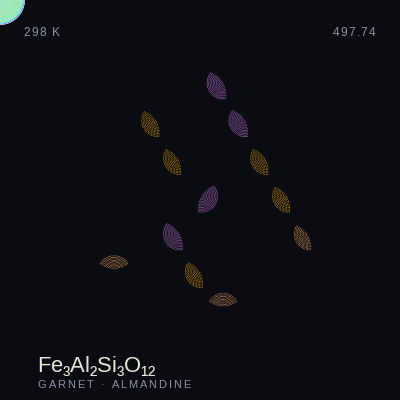
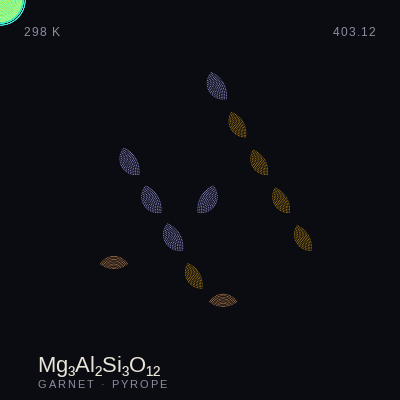
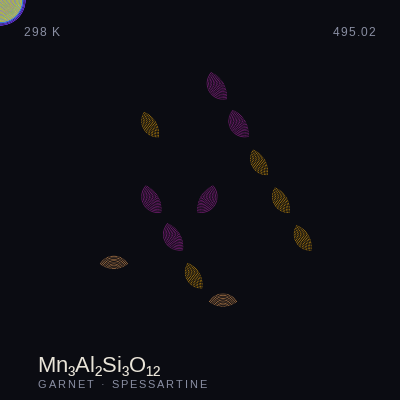
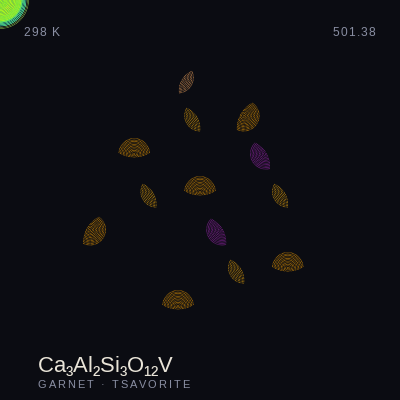
Almandine and pyrope are the deep reds of tradition; tsavorite is the rare green one.
Garnet · almandine, Garnet · pyrope, Garnet · spessartine, Garnet · tsavorite
 Elements
Birthstones
A birthstone is not a colour, it is a mineral — a definite crystal structure with a definite chemistry. These are those structures, drawn from their own atoms: the lattice, the elements, and the light each element gives off.
January · Garnet
Almandine and pyrope are the deep reds of tradition; tsavorite is the rare green one.
Garnet · almandine, Garnet · pyrope, Garnet · spessartine, Garnet · tsavorite
February · Amethyst
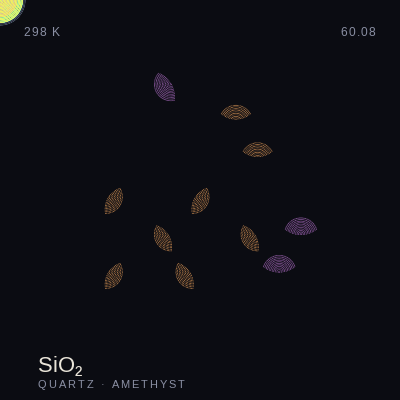
Quartz coloured by iron and natural irradiation — the same mineral as clear quartz, differently flawed.
March · Aquamarine
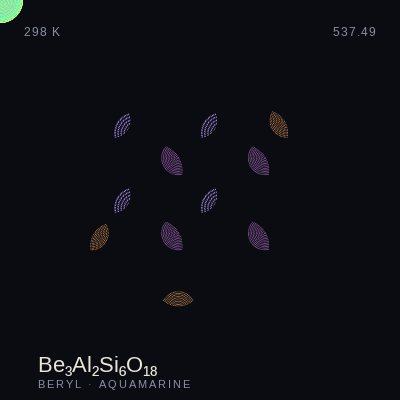
Beryl with a trace of iron; the same family as emerald, with a different passenger.
April · Diamond
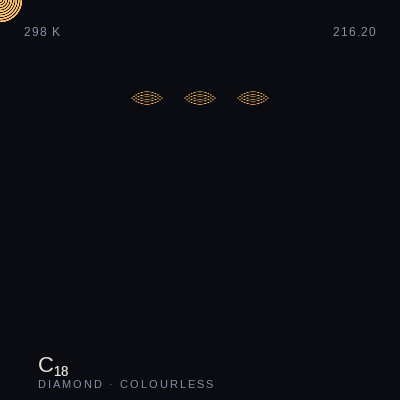
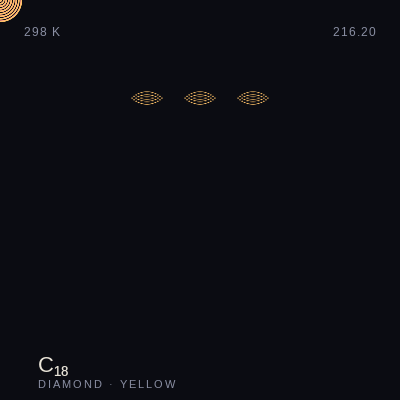
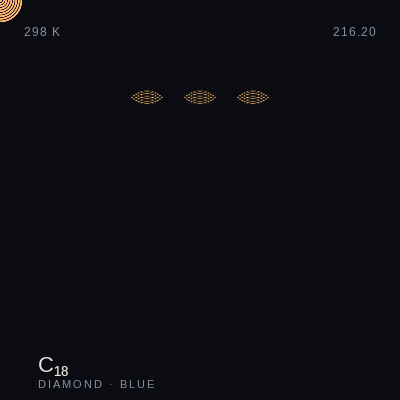
Carbon in its cubic form. The yellow and blue come from nitrogen and boron respectively.
May · Emerald
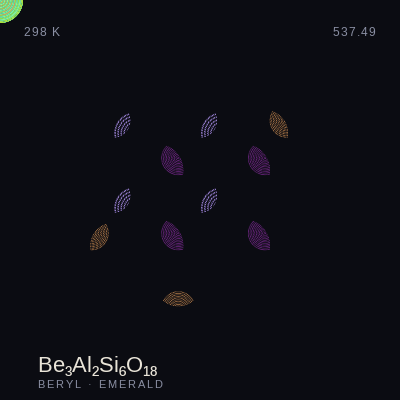
Beryl with chromium — the same element that makes ruby red, in a different lattice.
June · Pearl, alexandrite, moonstone
Not drawn yet
Not in the collection yet: a pearl is not a crystal, and alexandrite and moonstone are still to be drawn.
July · Ruby
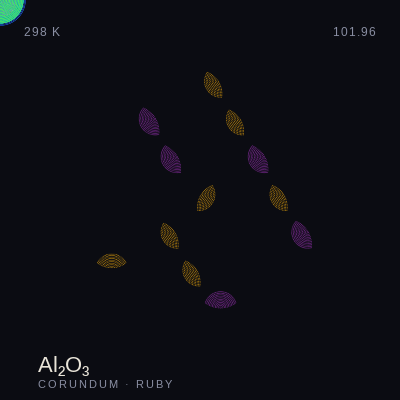
Corundum with chromium. The red light of chromium is also what made the first laser.
August · Peridot
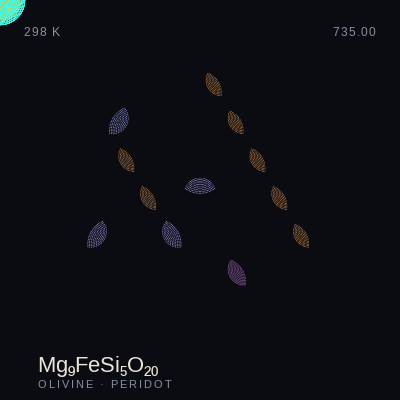
Olivine from the mantle — one of the few gems that forms in the Earth's interior rather than its crust.
September · Sapphire
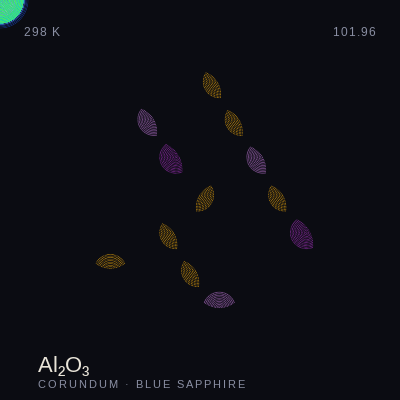
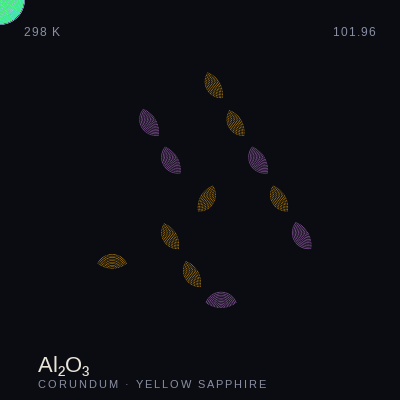
The same corundum as ruby; iron and titanium turn it blue instead of red.
October · Opal and tourmaline
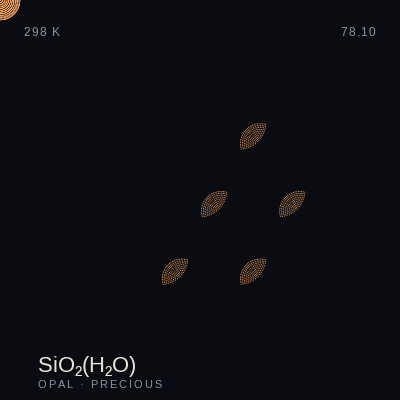
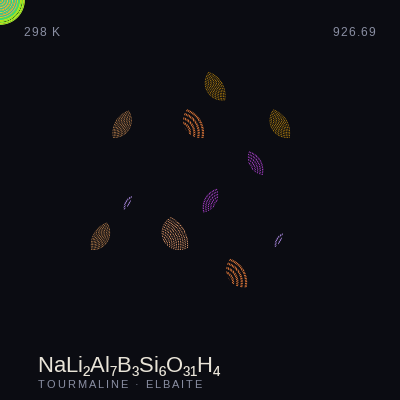
Precious opal diffracts light through stacked silica spheres; tourmaline carries more elements than almost any mineral.
November · Topaz
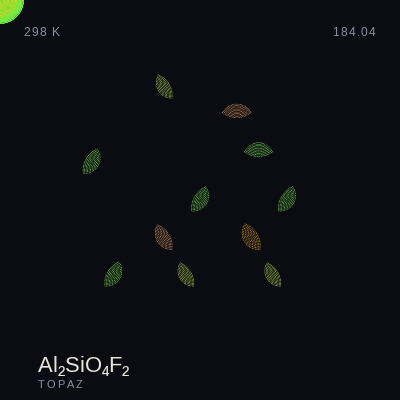
Aluminium silicate with fluorine; the imperial orange comes from chromium and iron.
December · Zircon
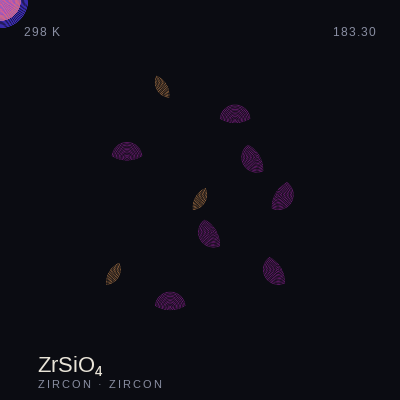
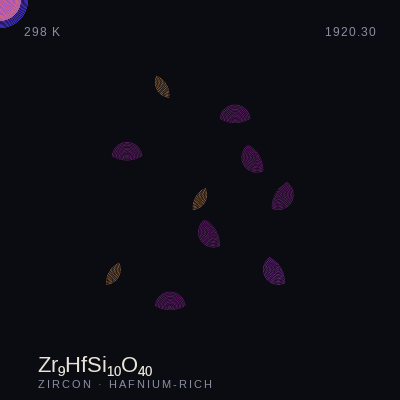
Not cubic zirconia — real zircon, the oldest mineral crystals on Earth.
Each is a real mineral with a definite crystal structure and chemistry: ruby and sapphire are corundum (aluminium oxide) coloured by chromium or iron; emerald and aquamarine are beryl; amethyst is quartz; garnet, topaz, zircon, peridot, opal and diamond are each their own compound. This page shows the structure itself, drawn from its atoms.
The colours follow each element's own emission spectrum rather than the cut stone's appearance. The drawing shows the lattice and the elements, which is a different — and more specific — kind of portrait.
Every piece will be available as clothing, stickers, metal posters and archival prints. The shops are being set up; save a piece to your favourites and the catalogue will keep it for you.
The birthstones are twelve of the fifty-nine minerals in the collection — the rest include malachite, fluorite, pyrite, cinnabar and the uranium ores.